Understanding Disclusion Time Reduction: A Comprehensive Guide

“Disclusion time reduction” is a dental-occlusal concept that is gaining increased traction in modern functional dentistry. At its heart, the term describes a treatment strategy designed to reduce the duration that posterior teeth remain in contact (or “in occlusion”) during excursive (side-to-side or forward) jaw movements, thereby alleviating muscle strain, joint discomfort, and dysfunction in the temporomandibular region. In this article we will explore the history, objectives, implementation methods, clinical impact, research evidence, comparisons with other methodologies, challenges, and future prospects surrounding disclusion time reduction.
Historical Background and Evolution
The idea underlying disclusion time reduction (DTR) emerged from developments in neuromuscular dentistry and occlusal analysis during the late 20th and early 21st centuries. Historically, dentists treated bite disorders, temporomandibular dysfunction (TMD), and occlusal trauma using gross adjustments—nightguards, full-arch equilibration, or splint therapy—without the fine-tuned data that later technologies would provide. As digital occlusal analysis tools like the T‑Scan system and electromyography (EMG) became more accessible, practitioners recognized that minute timing differences in tooth contacts during excursive movements could generate disproportional muscle hyperactivity and lead to long-term dysfunction.
Over time, the term “disclusion time reduction” solidified to refer specifically to the therapeutic process of identifying and reducing the amount of time posterior teeth remain in contact when the jaw moves away from maximum intercuspation. Clinical studies extended beyond simply force or contact location, to incorporate timing, muscle activation patterns, and how they relate to jaw joint symptoms and headaches.
In essence, disclusion time reduction borrowed from the fields of occlusion, biomechanics, neuromuscular dentistry and digital diagnostics to yield a more refined treatment pathway for patients suffering from bite-related disorders.
Objectives of Disclusion Time Reduction
The primary aim of disclusion time reduction is to minimise the time that posterior teeth remain engaged during jaw excursive movements. Achieving this objective can lead to several downstream benefits:
-
Reduce muscle hyperactivity: By shortening prolonged tooth contact, jaw muscles don’t remain in a state of excessive contraction, which can contribute to pain, fatigue, and headaches.
-
Improve temporomandibular joint (TMJ) health: A more balanced and rapid transition from occlusion to disclusion helps reduce undue load on the TMJ and associated supporting structures.
-
Enhance occlusal stability and function: A stable, functional bite helps reduce wear, fracture risk, and need for splint therapy or long-term appliances.
-
Accelerate symptom relief: In many cases, patients experience rapid improvement in jaw pain, headaches, clicking or popping of the joint—often within just a few visits.
-
Minimise invasive treatments: Because DTR focuses on precision micro-adjustments rather than wholesale occlusal overhauls, the treatment tends to be less invasive and more cost-effective compared with older modalities.
When implemented correctly, disclusion time reduction becomes part of a broader treatment palette for occlusal rehabilitation—complementing periodontal, restorative and orthodontic work, rather than replacing them.
Implementation: How Disclusion Time Reduction Works
The process of disclusion time reduction typically involves a structured workflow that leverages modern diagnostic tools and precision adjustment techniques. Below is an illustrative breakdown of the steps commonly used in clinical practice.
Assessment and Diagnostic Phase
First, the dentist utilises digital occlusal analysis equipment—most commonly the T-Scan system—to measure occlusal contacts and timing during dynamic jaw movements. The data reveals when and for how long posterior teeth are in contact during excursive shifts away from centric occlusion.
Simultaneously, electromyography (EMG) may be used to monitor jaw-muscle activity, identifying hyperactive or over-engaged muscles triggered by occlusal interferences or prolonged tooth contacts. This dual-modality (“T-Scan + EMG”) approach provides objective timing, force, and muscular response data, painting a richer picture of occlusal dysfunction.
Planning and Adjustment
Once diagnostic data is in hand, the clinician plans micro-adjustments—such as minor enameloplasty (selective removal of small amounts of tooth substance), or minimal composite additions—to shorten the contact time of posterior teeth during excursive movement. The goal is to achieve a rapid disclusion, often within a target timeframe (for example, under 0.4 seconds, though exact thresholds may vary by practitioner).
Treatment Delivery
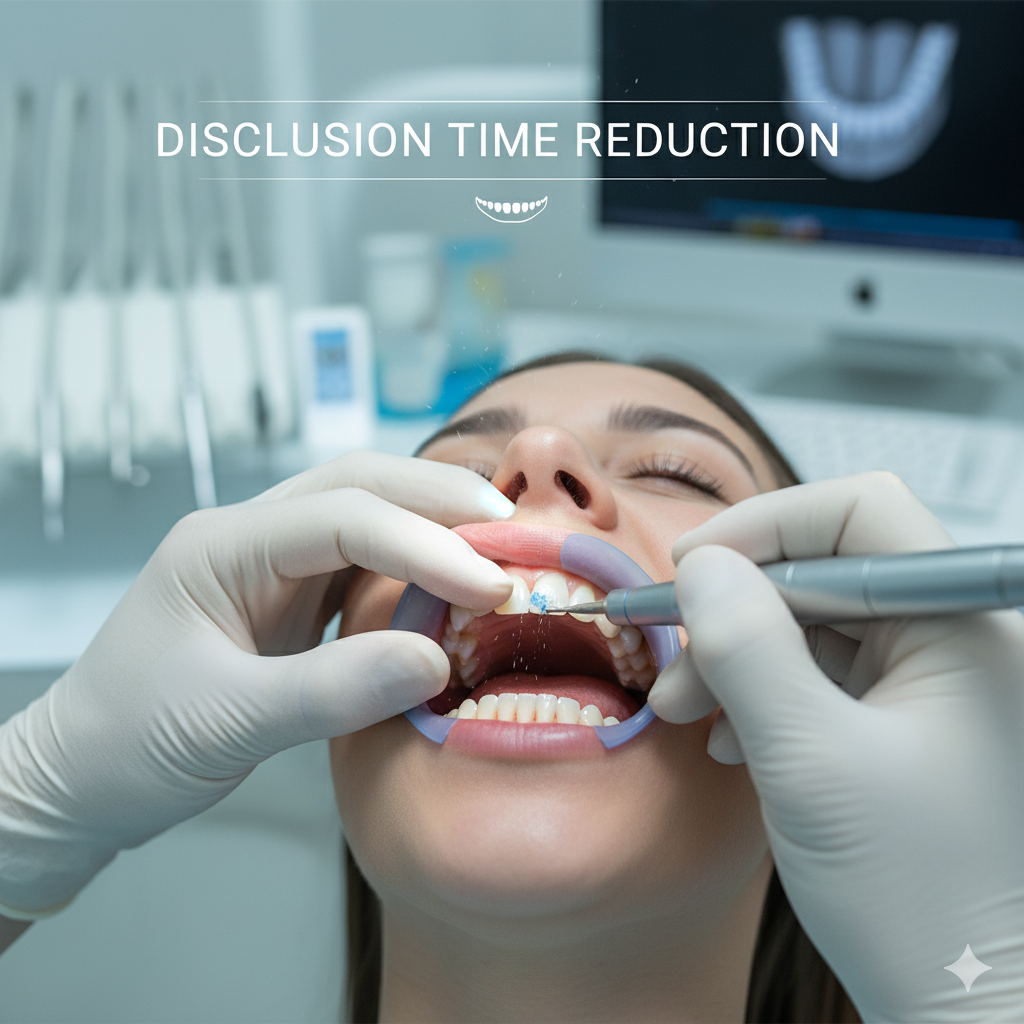
The actual intervention is relatively conservative: using handpiece or polishing instruments, the dentist makes small modifications of occluding surfaces guided by the data from the T-Scan/EMG system. Because the adjustments are so precise, the treatment often requires only one to three visits in many cases.
Verification and Follow-Up
After adjustments, a follow-up T-Scan/EMG reading is taken to confirm the decreased disclusion time and improved muscle response. Patients are monitored for relief of symptoms (jaw pain, headaches, clicking) and functionality (comfortable chewing, absence of splints). Some practitioners incorporate a review at 6-12 months or more to ensure stability of outcomes.
Clinical Impact and Research Evidence
A growing body of literature supports the viability of disclusion time reduction in the management of occlusal and temporomandibular dysfunctions. For instance, one study published in the National Library of Medicine reported that DTR therapy combined T-Scan and EMG to analyse muscle activity & disclusion time, then executed micro-adjustments resulting in symptom relief.
Moreover, practitioner reports frequently highlight dramatic improvements—even for patients who had exhausted conventional treatments such as nightguards, bite splints or magnetic appliances. In one clinical practice description, patients reported elimination of headaches and jaw muscle tension after 1–3 visits.
It is noteworthy that proponents claim the results are durable, lasting for years when occlusion remains stable. Some training organizations note 27 years of published research affirming that DTR is “the most effective treatment option available today” for TMJ/TMD patients suffering from bite-related muscle dysfunction.
In short, the clinical impact of disclusion time reduction can include:
-
Significant reduction of jaw pain, neck tension, chronic headaches
-
Decrease in splint or appliance dependency
-
Improved chewing comfort and occlusal stability
-
Shorter treatment times (compared with more invasive occlusal re-equilibration)
Comparison with Other Approaches
To further understand the value of disclusion time reduction, it is useful to compare it with alternative or more traditional occlusal therapies.
Nightguards / Splint Therapy
Nightguards have long been a standard treatment for bruxism, clenching and occlusal overload. While useful, nightguards typically treat the effect (grinding or clenching) rather than the cause (occlusal timing/contacts). They can also be bulky, require long-term compliance and may not directly address contact timing. In contrast, DTR addresses the foundational issue of contact timing and muscular load, and often requires fewer visits and no long-term appliance.
Full-Mouth Equilibration
Full-mouth occlusal equilibration involves more extensive adjustments of all tooth contacts to optimise occlusion. While effective, it can be invasive, time-consuming, and expensive. Disclusion time reduction offers a more targeted micro-adjustment strategy focussing on excursive contact duration rather than wholesale reworking of the occlusion, thus often being less invasive and more efficient.
Orthodontics & Restorative Modification
When occlusal issues stem from misalignment or restorative defects, orthodontics or full-mouth restorative therapy may be required. These are valuable avenues, but their turnaround time is often longer, and they address alignment rather than the dynamic timing of contacts. DTR can complement these therapies by fine-tuning occlusal dynamics once alignment/restoration is established.
Botox or Muscle Relaxant Approaches
Some clinicians have used injection therapies (e.g., botulinum toxin) to address muscular hyperactivity associated with TMD. While useful in certain contexts, these treatments address muscle behaviour rather than correcting the occlusal trigger. Disclusion time reduction seeks to correct the seed (occlusal contact timing) rather than just the symptom (muscle contraction).
In summary, disclusion time reduction stands out as a focused, data-driven, minimally invasive treatment pathway that can integrate with or replace more traditional occlusal therapies depending on patient presentation.
Success Stories and Practitioner Perspectives
Many patients and clinicians report significant success with disclusion time reduction, particularly in cases previously deemed “treatment-resistant.” For example, a patient with chronic headaches, jaw muscle fatigue, and a history of nightguard use found relief after one session of DTR therapy: jaw tension literally “disappeared” during the adjustment.
Dentists trained in DTR protocols emphasise the efficiency: “results in one to three visits, lasting years” is a common phrase in clinic literature. These success stories highlight the potential of DTR for dramatically improving quality of life, chewing comfort, and reducing dependence on splints or pain medication.
From a practitioner viewpoint, DTR brings “hard data” (timing, force, muscle response) into a field historically dominated by more subjective manual adjustment. This objective measurement fosters higher confidence, predictability and replicable outcomes.
Challenges and Considerations
While the benefits of disclusion time reduction are clear, there are important caveats and challenges that clinicians and patients alike should be aware of.
Training and Certification
Effective implementation of disclusion time reduction requires advanced training in digital occlusal analysis (T-Scan), electromyography, and occlusal biomechanics. Not all dentists are certified in DTR, and improper technique may lead to suboptimal outcomes. As one training provider notes, certification includes equipment ownership, didactic coursework, live-patient training and mastery of occlusion anatomy and biomechanics.
Patient Selection
Not all occlusal or TMJ problems are caused by prolonged posterior tooth contact. Some may derive from joint degeneration, systemic conditions, muscular disorders or non-occlusal pain origins. In those cases, DTR may not yield the expected results. Appropriate diagnosis is therefore essential.
Long-Term Maintenance
Although many practitioners report durable results, long-term occlusal stability remains a prerequisite. Patients who grind or clench heavily, have shifting dentition, or undergo new restorations may require re-assessment. Periodic monitoring ensures that disclusion timing remains within ideal parameters.
Cost and Insurance Coverage
Because DTR is a relatively specialised procedure, insurance coverage may be limited. Some practices treat it as an out-of-pocket expense. Patients should check with their provider.
Research Limitations
While there are encouraging case studies and clinical reports, comprehensive long-term randomized controlled trials are still limited. As with any relatively new therapeutic approach, ongoing research will help refine protocols, thresholds and best-practice guidelines.
Future Prospects and Innovation
Looking forward, the horizon for disclusion time reduction is promising. Several developments may shape the next decade of this field:
-
Enhanced Digital Integration: With advancing sensor technology, artificial intelligence and wearable monitoring, real-time occlusal analysis may become more accessible and automated, enhancing DTR workflows.
-
Preventive Applications: Rather than waiting for symptoms, disclusion time reduction could be applied proactively—e.g., immediately after orthodontic treatment or full-mouth restorations—to ensure optimal excursive timing and prevent future issues.
-
Broader Access and Training: As certification pathways expand and more dentists adopt the T-Scan/EMG workflows, DTR may transition from niche to standard of care for certain occlusal presentations.
-
Research Expansion: Future large-scale clinical trials and meta-analyses will help more definitively quantify benefits, ideal thresholds (e.g., disclusion timing targets), and populations most likely to benefit.
-
Integration With Minimally Invasive Dentistry: DTR aligns well with the ethos of minimally invasive, data-driven treatment. As dental care emphasises preservation, biomimetics and functional optimisation, DTR may become a central pillar.
Overall, the future of disclusion time reduction appears rooted in precision, data-driven occlusal health and integration with broader dental workflows.
Summary
The concept of disclusion time reduction stands at the convergence of occlusal biomechanics, neuromuscular dentistry, digital diagnostics, and patient-centred treatment. By focusing on the timing of posterior tooth contact during jaw movement, rather than just force or location of contacts, DTR offers a unique and often efficient pathway to relieve jaw pain, muscle fatigue, headaches, and occlusal instability. Implemented with the correct technology (T-Scan + EMG), training, and follow-up, disclusion time reduction can complement or even replace traditional occlusal therapies such as splinting, full-mouth equilibration or broad orthodontic intervention. Although training, patient selection and long-term monitoring remain important considerations, the expanding evidence base and future-oriented innovations suggest that DTR will increasingly become a mainstream modality in functional dentistry. Whether you are a dental professional seeking to adopt the latest methods or a patient exploring advanced solutions for jaw/joint discomfort, disclusion time reduction merits strong consideration.
Frequently Asked Questions
What exactly is disclusion time reduction and how is it measured?
Disclusion time reduction refers to the process of shortening the duration that posterior teeth remain in contact during excursive jaw movements (side-to-side or forward). It is measured using digital occlusal analysis systems (such as the T-Scan) that record timing and force of contacts, often paired with EMG to track muscle activity.
How many visits does the treatment typically require?
In many clinical reports the treatment takes between one to three visits, especially for straightforward cases. Follow-up checks may be recommended to ensure stability over time.
Is disclusion time reduction suitable for all temporomandibular joint (TMJ) disorders?
No. While disclusion time reduction is highly effective for cases where occlusal timing and muscle hyperactivity are key drivers, other TMJ disorders—such as joint degeneration, systemic muscular disease, or neuropathic pain—may require broader interventions. A thorough diagnosis is essential.
Does insurance cover disclusion time reduction therapy?
Coverage varies by insurance provider and policy. Because DTR therapy is somewhat specialised, many insurance plans may consider it elective or out-of-network. It is advisable to check with your provider regarding reimbursement.
What are the long-term outcomes of disclusion time reduction?
Many practitioners report durable outcomes lasting several years when occlusion remains stable and the patient maintains good habits. However, long-term success may depend on follow-up care, new restorative work, or changing bite conditions.
How is disclusion time reduction different from a nightguard or splint?
Nightguards or splints primarily treat the symptom of grinding or clenching by providing a protective interface. Disclusion time reduction, in contrast, targets the underlying occlusal timing issue that may be triggering muscle hyperactivity and joint strain. It emphasises micro-adjustment of contacts rather than simply cushioning them.
Can disclusion time reduction be combined with orthodontic or restorative treatments?
Yes. DTR complements orthodontic alignment and restorative work by fine-tuning occlusal timing once major alignment or functional restoration has been achieved. Integrating DTR into restorative or orthodontic workflows can enhance overall treatment success.