Piercing Gun vs Needle: A Comprehensive, In-Depth Guide for Safe, Hygienic, and Responsible Body Piercing
Body modification has shifted from a niche cultural practice to a mainstream form of self-expression, especially in a world where individuality is celebrated more than ever. People across urban and rural communities, men and women alike, now participate in various forms of piercing, each with its own aesthetic value and personal significance. Yet one debate refuses to settle: the choice between piercing gun vs needle. This comparison—simple on the surface—actually involves public health considerations, safety standards, regional awareness, regulatory frameworks, social development, and even gender-centered empowerment through hygienic practices.
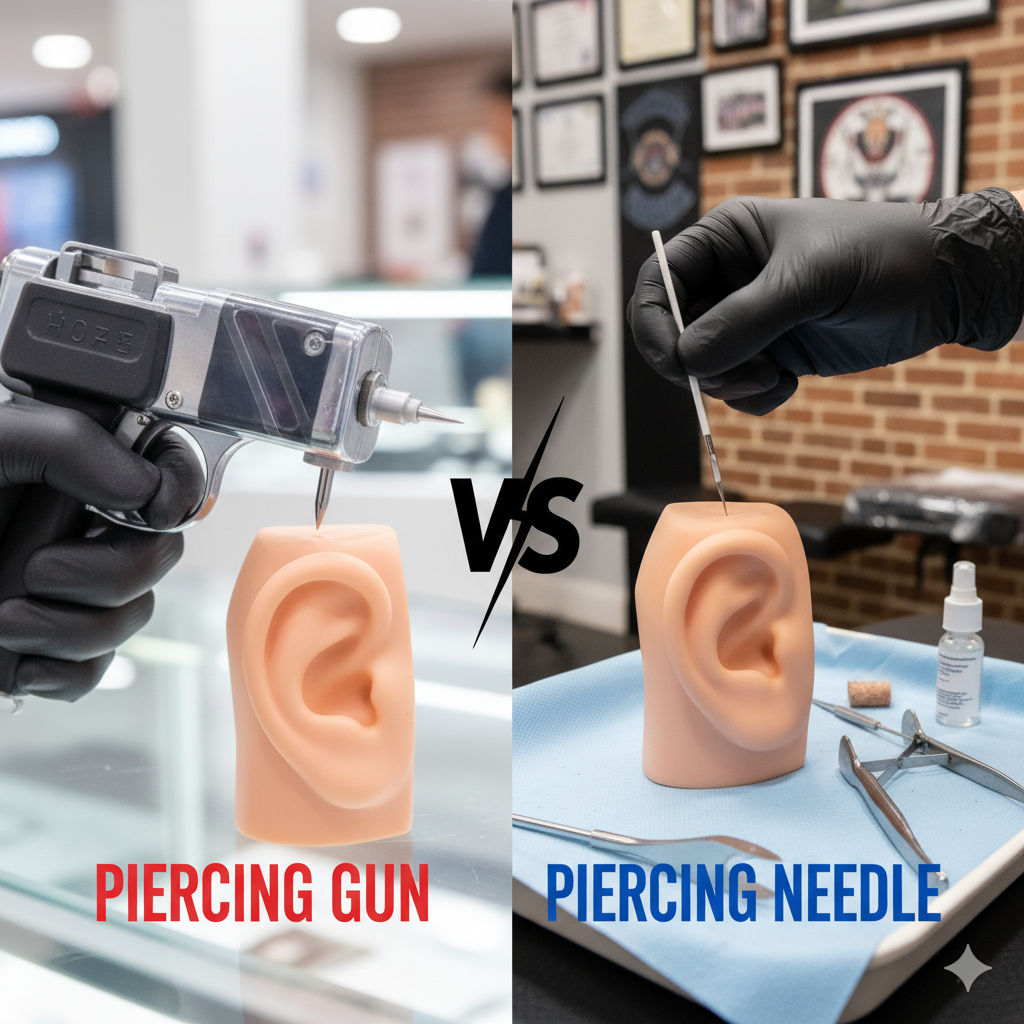
Understanding the difference between these two tools is not only crucial for personal safety but also reflects a larger ecosystem of wellness education, professional training, rural development in beauty industries, and policy efforts to raise hygiene awareness. The long-standing confusion about which method is safer continues to shape customer decisions, salon policies, and even state-wise health guidelines. This detailed article explores the entire landscape surrounding the piercing gun vs needle conversation, tracing its history, technologies, health implications, success stories, challenges, and evolving future.
Understanding the Origins: How Piercing Methods Evolved Over Time
The debate around piercing gun vs needle becomes clearer when we understand the historical evolution of both tools. Body piercing itself is ancient, dating back thousands of years, but standardized tools only emerged in the last century.
Piercing needles have roots in traditional practices where sharpened bones, metal spikes, or threaded tools were used to create a channel in the skin. As modern medicine advanced, hollow needles designed for surgical precision became the norm. Their adoption in piercing studios rose sharply as global sanitation awareness improved. Today, they represent a more controlled, minimally traumatic method aligned with professional health standards.
Piercing guns, on the other hand, entered mainstream retail spaces in the late 20th century. Their rise came from a desire for quick, minimally trained application—especially in malls, jewelry stores, and small beauty outlets. They became popular for ear piercings, especially among young girls and women, because they created an impression of speed and convenience. However, as hygiene standards evolved and regional health authorities examined the risks, debates intensified, renewing interest in the piercing gun vs needle question.
Understanding this history helps highlight why policies, professional guidelines, and consumer preferences differ across regions and states.
What Exactly Happens During Piercing? A Technical Comparison Between Gun and Needle
To appreciate the technical distinctions, imagine how each method interacts with your skin. The piercing gun vs needle debate has little to do with outward appearances and everything to do with internal tissue response and hygiene.
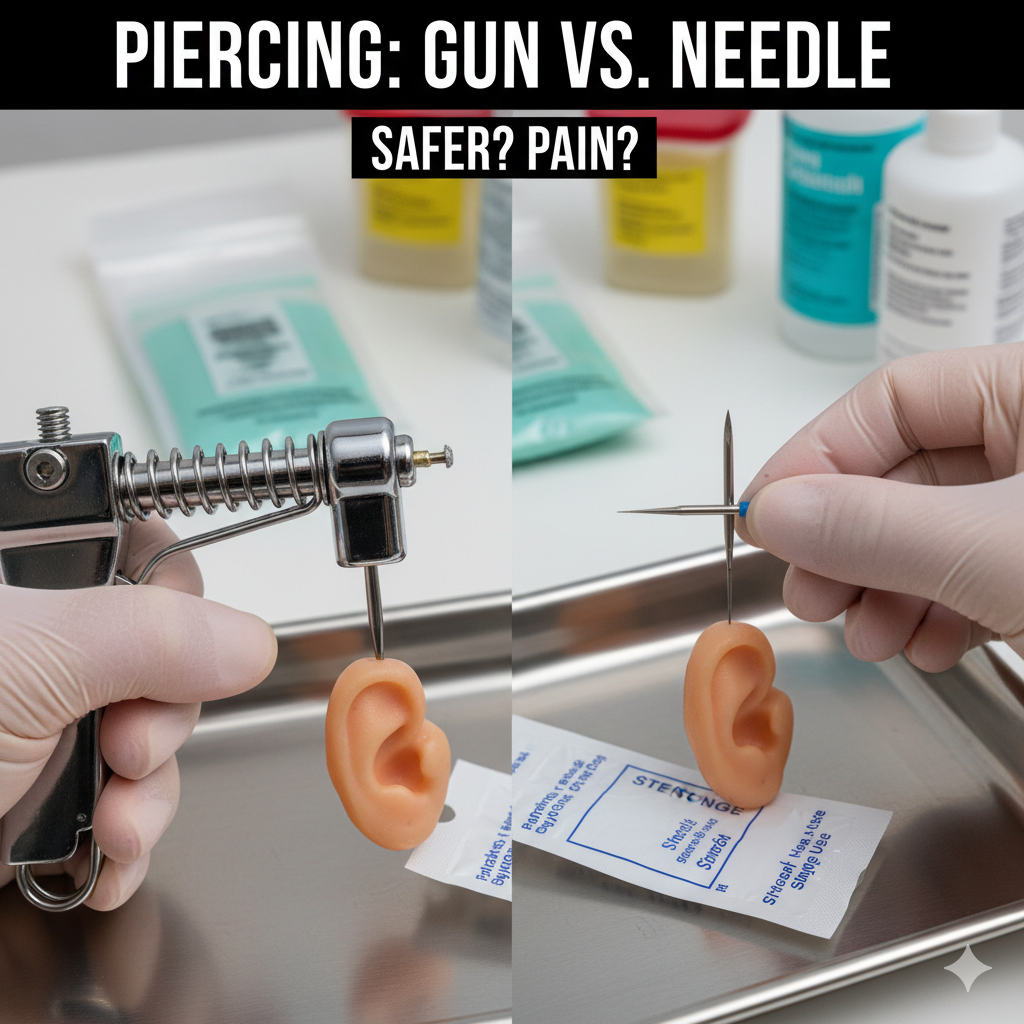
A piercing gun uses spring-loaded force to push a blunt stud through the tissue. This action causes the skin to tear rather than glide apart, often leading to micro-trauma. The gun itself, usually plastic, cannot be fully sterilized using medical autoclave standards. Even when the jewelry comes in sealed cartridges, the gun’s reusable components may come into contact with bodily fluids, posing a hygiene challenge.
A piercing needle, however, is hollow and surgically sharp. It creates a clean incision, gently separating tissue to form a controlled channel. New sterile needles are used for every client and disposed of immediately afterward. This aligns with health frameworks that aim to reduce infection risks across urban and rural communities, ensuring equitable access to safe procedures.
Professional piercers overwhelmingly prefer hollow needles, not just for safety but also because they allow better jewelry placement, smoother healing, and greater precision across body areas that differ in thickness and sensitivity.
Health and Safety: Why the Piercing Method Matters
Health risks remain the strongest reason the piercing gun vs needle debate continues. Policy makers, dermatologists, and certified piercing associations repeatedly stress that improper hygiene or technique can lead to complications such as:
• Infection caused by bacteria entering fresh wounds
• Tissue damage due to pressure trauma
• Keloid formation especially in sensitive skin types
• Cross-contamination risks when reusable tools are not sterilized
• Allergic reactions to low-quality jewelry
Piercing guns, because of their mechanism, tend to increase these risks, especially if they are used on areas like cartilage where the tissue is rigid and prone to cracking under blunt force. Many state-level guidelines in developed countries already discourage gun use for cartilage piercings. Even some regional development initiatives promoting safe beauty practices highlight the importance of sterile techniques—particularly in rural areas where training might be limited.
Needle piercing, by contrast, is widely endorsed due to its lower tissue trauma, improved sterilization, and compatibility with medical hygiene standards. As consumer awareness grows, especially among women who undergo piercings more frequently, support for training programs and women-empowerment schemes tied to safe salon practices continues to strengthen.
Regional Impact: How Different Places View the Piercing Gun vs Needle Debate
The piercing gun vs needle issue varies across regions because access to professional piercers, awareness campaigns, and policy implementation differs significantly. In urban centers, professional studios are widely accessible, making needle piercing more common. Customers who do research often choose professionals trained in anatomy, sterilization protocols, and accredited safety courses.
However, in smaller towns or rural districts, piercing often happens in small beauty parlors or household setups where piercing guns are more common due to lack of formal training resources. This creates disparities in safety standards. Regional health authorities that promote rural development and women empowerment frequently highlight the importance of hygiene education, because many female entrepreneurs in beauty services learn skills informally.
There are successful examples of rural salons shifting from guns to needles after community workshops or government-supported awareness campaigns. These case studies demonstrate how education can reduce infection rates, empower women to run safer businesses, and elevate social welfare standards across districts.
Policy Framework and Implementation: How Governments Regulate Piercing Practices
Policies regarding piercing gun vs needle differ internationally, but many common themes appear. Regulatory frameworks generally cover sanitation requirements, certification for piercing professionals, jewelry standards, and equipment sterilization protocols.
In some regions, public health departments have issued advisories discouraging the use of piercing guns for any body part other than soft earlobes. Even then, educational materials stress the importance of single-use cartridges and responsible disposal methods.
State-level implementation often depends on infrastructure. Where autoclaves are mandatory in salons, needles become the preferred method. Where regulations are loosely enforced, piercing guns dominate because they seem easier to use. Various social welfare initiatives aimed at improving hygiene training have successfully integrated safe piercing modules into skill-development programs for young women starting beauty careers.
The growing influence of beauty-sector policies ensures that comparative debates like piercing gun vs needle are no longer ignored. As governments strengthen inspection systems and licensing norms, the industry continues to shift toward safer methods.
Objectives Behind Promoting Safe Piercing Practices
Understanding the motivation behind discouraging unsafe practices helps clarify the wider purpose beyond individual health concerns. Public health departments, NGOs, and professional associations often set the following objectives:
• Reduce infection rates, especially in regions with limited medical access
• Standardize hygiene practices in salons and studios
• Promote professional training programs in rural and semi-urban areas
• Elevate women empowerment by ensuring safe working environments
• Prevent cross-contamination risks from reusable equipment
• Encourage customer awareness through digital health campaigns
• Establish guidelines that align with long-term social welfare strategies
These objectives directly influence the adoption of safe methods like needle piercing. The piercing gun vs needle discussion becomes part of a broader development narrative, one that includes economic growth, women-led entrepreneurship, and wellness-centered consumer behavior.
State-Wise Impact: How Local Regulations Influence Piercing Methods
Different states or provinces may adopt slightly different rules based on healthcare infrastructure, training institutes, and local cultural tendencies. States with strong regulatory bodies often mandate the use of sterile, single-use piercing needles for most body parts. Inspections ensure that salons using piercing guns meet hygiene standards, though many eventually phase them out due to compliance challenges.
In states where women empowerment programs support beauty-sector training, the curriculum typically includes modules on infection control and the science behind tissue healing. These programs promote needle piercing as a safer, more professional technique, preparing beauty workers for sustainable income opportunities.
Some regions have even reported improved outcomes for young entrepreneurs who shift from piercing guns to needles, because customers increasingly prefer safety-certified services. These local success stories highlight how the piercing gun vs needle debate intersects with economic development and public health.
Social Welfare and Women Empowerment: How Safe Piercing Practices Benefit Communities
Piercing is more than a beauty service in many places. It can be a pathway toward income, independence, and entrepreneurship—especially for women running home-based or small salons. Social welfare initiatives and women-empowerment schemes often recognize beauty services as high-access industries where women can quickly gain skills and build livelihoods.
When training programs emphasize safe piercing techniques, women gain more than technical knowledge—they gain credibility and trust in their communities. Safe tools like sterile needles align with international health standards, helping entrepreneurs avoid legal risks and customer complaints.
Some community centers have introduced certification programs that include modules specifically built around the piercing gun vs needle comparison. These programs encourage women to adopt safer tools, boosting long-term sustainability for their businesses.
Real-World Success Stories: How Communities Benefit from Safe Piercing Education
There are several powerful examples of communities transforming their beauty practices through education. In small townships where piercing guns were once the norm, targeted workshops have helped dozens of salons transition to needle-based techniques. The result has been fewer reported infections, greater customer satisfaction, and stronger market demand for trained professionals.
Similarly, youth skill-development initiatives that incorporate practical and theoretical knowledge of piercing have seen increased employment rates. Students who understand safety standards—particularly the reasons behind choosing a procedure in the piercing gun vs needle debate—become more competitive in professional beauty markets.
These stories demonstrate that progress is not limited to metropolitan cities. Rural areas, too, experience growth when health-aligned beauty services become accessible.
Challenges That Continue to Shape the Industry
Despite widespread awareness, several barriers slow the transition from guns to needles:
Limited access to sterilization equipment
Some rural salons cannot afford autoclaves or rely on makeshift hygiene techniques.
Cultural familiarity with piercing guns
People raised with mall-based ear piercing may trust guns simply because they are common.
Lack of formal training opportunities
Without state-supported programs, many beauty technicians rely on outdated methods.
Price differences
Some salons view guns as a cheaper long-term investment, even though needle-based setups are often safer.
Consumer misinformation
Some still assume guns are faster or less painful despite medical evidence suggesting otherwise.
Addressing these challenges requires ongoing education, strong policy enforcement, and sustained efforts from community-based organizations.
A Deep Comparison: Piercing Gun vs Needle in Terms of Pain, Healing, and Precision
For customers, questions about pain and healing often outweigh policy or economic concerns. Understanding these factors strengthens informed decision-making.
Pain Level
With piercing guns, the blunt force impact typically causes sharper initial pain. Needles create a cleaner incision, resulting in smoother and more predictable pain levels.
Healing Time
Piercing guns often slow healing due to tissue trauma. Needles promote better healing because the wound is controlled.
Precision
Guns offer limited control over angle and depth. Needles allow piercers to adjust angles, especially for cartilage, tragus, nose, and more complex piercings.
Jewelry Options
Guns typically use butterfly-back studs unsuitable for many piercings. Needles accommodate professional jewelry designed for optimal healing.
These distinctions highlight why the piercing gun vs needle conversation remains crucial for health-conscious customers.
The Future of Piercing: Trends and Technological Improvements
The future leans strongly toward needle-based methods, not only because of safety but also because of innovations in studio sterilization, material quality, and jewelry technology. Autoclave advancements, disposable equipment, hypoallergenic metals, and improved aftercare solutions all support needle piercing as an evolving standard.
There is also a growing movement toward state-certified professional courses. As these programs grow across sectors like rural development and women empowerment, they bring global best practices into local communities. Even digital learning platforms are beginning to include modules that analyze topics like piercing gun vs needle, helping bridge knowledge gaps.
Technological growth in the jewelry industry also improves outcomes. Implant-grade titanium and niobium reduce allergic reactions, while threadless push-pin jewelry offers secure, comfortable wear.
In the long run, widespread access to professional training and community education is likely to phase out piercing guns almost entirely.
Why the Debate Still Matters Today
The piercing gun vs needle debate represents more than a personal choice. Its significance extends to public health, regulatory oversight, gender-centered professional growth, and consumer rights. Understanding the difference allows people to make informed decisions that support long-term well-being.
Whether you live in a thriving metropolitan area or a smaller rural district, awareness empowers you to choose safer services. And for professionals, adopting needle techniques strengthens credibility, opens career opportunities, and aligns with global health standards.
Conclusion: Making an Informed Choice for Safe Piercing
After examining every aspect—technology, hygiene, training, policy implementation, regional impact, social welfare significance, and real-world outcomes—the evidence consistently supports needle piercing as the safer, more sustainable, and globally accepted practice.
The conversation around piercing gun vs needle is not just about technique; it reflects broader goals like raising hygiene standards, expanding women’s skills, improving rural beauty services, and fostering socially responsible development. By choosing trained professionals and understanding the science behind piercing methods, consumers and communities alike contribute to healthier, empowered futures.
FAQs
What is the main difference between a piercing gun and a needle?
A piercing gun forces blunt jewelry through the skin, while a needle creates a clean, precise incision. The needle method is considered safer and more hygienic.
Is needle piercing less painful?
Generally yes. Needles are sharper and cause less tissue trauma, resulting in smoother pain response and faster healing.
Why are piercing guns considered risky?
They cannot be fully sterilized, may cause tissue tearing, and increase the chances of infection and complications.
Are piercing guns safe for cartilage?
No. Most experts advise against using guns for cartilage because the blunt force can damage the tissue and lead to serious complications.
Which method heals faster?
Needle piercings typically heal faster due to controlled incision and reduced trauma.
Can rural or small-town salons use needle methods easily?
Yes. With proper training and safe-practice guidelines, needle piercing is accessible to salons of all sizes, especially through skill-development and empowerment programs.
How do I know if my piercer is using hygienic methods?
Check if they open sterile needles in front of you, use gloves, clean surfaces properly, and follow professional aftercare standards.